Gauss’s Law: How to Calculate Electric Field Through Surfaces
In one line: Gauss’s Law — exam-ready notes in one glance.
- Flux: Field Flowing Through a Surface
- The Law Itself
- The Three Sacred Shapes
- The Shell Theorem of Electricity
- Solved Examples
- This Physics in Your Daily Life
- Practice set (answers hidden – try first)
- Frequently Asked Questions
- What should you know about Flux: Field Flowing Through a Surface?
- What should you know about The Law Itself?
- What should you know about The Three Sacred Shapes?
- What should you know about The Shell Theorem of Electricity?
- What should you know about Solved Examples?
- Exam Checklist
- FAQ
- How much of this page is exam-relevant?
- When should I revisit?
- The Thirty-Second Recap
- Explain It Simply
- Abbreviations That Recur Here
- Key Takeaways
- The Framework Line to Memorise
In one line: JEE/NEET Physics ? Electrostatics series ? Part 4 of 8 ? All parts ? Key points – the 30-second versionGauss’s law: total field through a closed surface.
JEE/NEET Physics ? Electrostatics series ? Part 4 of 8 ? All parts
- Gauss’s law: total field through a closed surface ? charge enclosed
- Flux = field x area (for uniform, perpendicular field): ? = EA
- The magic: only the ENCLOSED charge matters – outside charges contribute zero net flux
- Three sacred shapes: sphere, infinite wire, infinite sheet
- Field tricks it hands you: shell E = 0 inside; sheet E = ?/2?0 everywhere
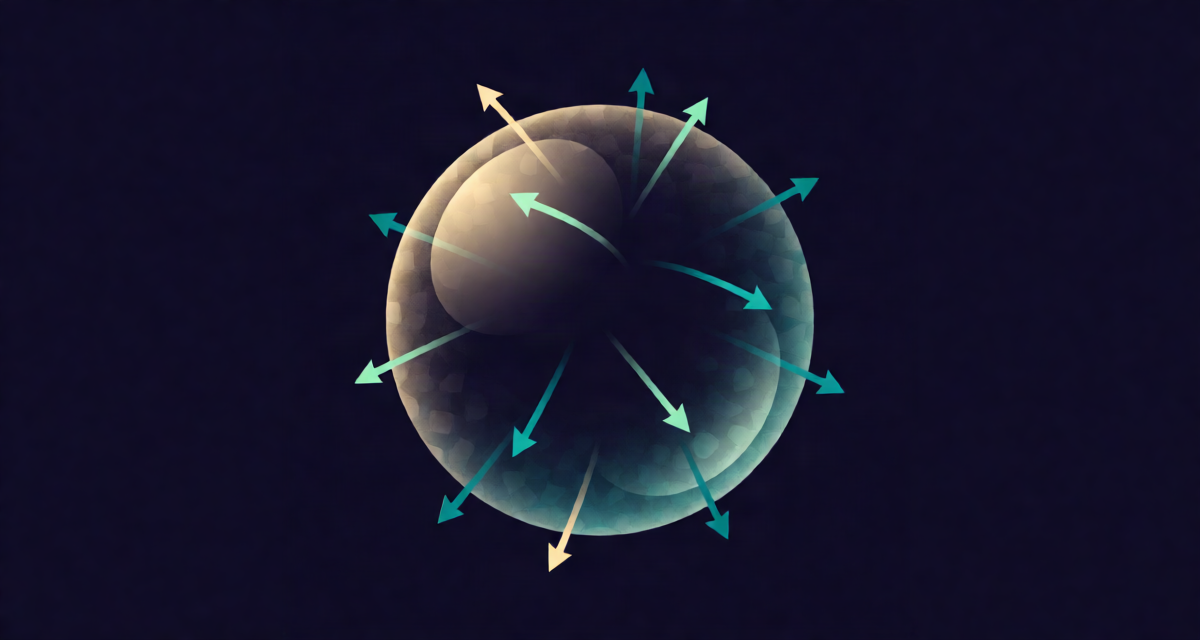
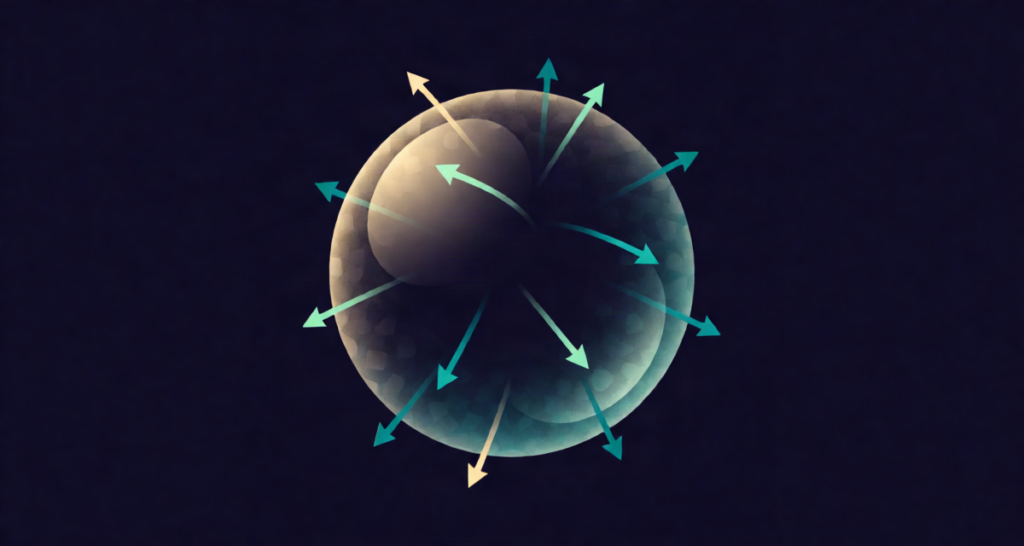
Imagine surrounding any charge distribution with an invisible closed bag and counting how much field ‘flows out’ through the bag. Therefore, Gauss’s law says that outflow depends on only one thing: how much charge is INSIDE the bag. Indeed, Nothing else – not the bag’s shape, not outside charges. Meanwhile, This one idea solves otherwise-impossible problems in three lines. Part 4 of the Electrostatics series.
- Therefore, flux: field flowing through a surface
- What each letter means
- The law itself
- In addition, the three sacred shapes
- The shell theorem of electricity
- Solved examples
- Therefore, common mistakes
- This physics in your daily life
- Practice set
- In addition, recap
Flux: Field Flowing Through a Surface
Picture field lines as wind. Consequently, The amount of ‘field-wind’ passing through a surface is the flux – for a simple flat surface in a uniform perpendicular field, flux = field x area:
| Letter | What it means (plain words) | Value / unit |
|---|---|---|
| ? (phi) | electric flux – field through the surface | N?m?/C |
| E | field strength | N/C |
| A | surface area | m? |
| q_enc | charge enclosed INSIDE the closed surface | C |
| ?0 (epsilon-nought) | the permittivity of free space – vacuum’s electrical constant | 8.85×10?1? C?/N?m? |
The Law Itself
Read it slowly: the TOTAL flux through any closed surface depends ONLY on the enclosed charge. Consequently, A charge outside the bag: its lines enter and leave – net zero. Meanwhile, Double the bag’s size around the same charge: field weakens by 4, area grows by 4 – flux unchanged. In fact, That cancellation is the law’s deep content (and the 1/r? law’s fingerprint).
The Three Sacred Shapes
| Charge shape | Gaussian surface | Result | Why it matters |
|---|---|---|---|
| Point/sphere | concentric sphere | E = kQ/r? outside; E = 0 inside a shell | shell theorem, electric style |
| Infinite line/wire | coaxial cylinder | E = ?/(2??0r) | falls as 1/r, not 1/r? |
| Infinite flat sheet | pillbox (flat box straddling) | E = ?/2?0, CONSTANT with distance | doesn’t fall off at all! |
The recipe for using Gauss: (1) spot a symmetry (spherical, cylindrical, planar); (2) choose the matching surface where E is constant on it; (3) ? = EA = q_enc/?0; (4) solve for E. Furthermore, Symmetry does the calculus for you.
The Shell Theorem of Electricity
Just as gravity’s shell theorem (Gravitation Part 9) zeroed the field inside a uniform shell, Gauss proves it electrically: inside a uniformly charged spherical shell, E = 0 everywhere – the enclosed charge is zero, so the flux is zero, so the field must vanish. Same mathematics, new force.
Solved Examples
Outside/surface (sphere behaves as a point at centre): E = kQ/R? = 9×10? x 4×10?7 / 0.04 = 9×10⁴ N/C.
Inside (if it’s a shell): zero – no enclosed charge. ?
Answer: E = 9×10⁴ N/C at surface; 0 inside the shell
The shape is irrelevant: ? = q/?0. (Through ONE face, by symmetry: q/6?0 – the classic JEE twist.)
If the charge sits ON a corner instead: only 1/8 of the charge’s field enters the cube’s interior region. the flux becomes q/8?0. Notably, Shape, corner-questions: always count enclosed fractions. ?
Answer: ? = q/?0 (total); q/6?0 per face
Outside charges contribute ZERO net flux – their lines enter and leave the surface in equal measure.
Flux unchanged: q/?0. Only moving the inside charge (or adding one within) changes it. Notably, This is the most-tested conceptual line of Gauss’s law. ?
Answer: unchanged – q/?0
- Counting outside charges in q_enc. Only the enclosed charge sets the flux. Specifically, Outside charges distort the field pattern but contribute zero NET flux through a closed surface.
- Believing flux depends on surface size or shape. Same enclosed charge same total flux, whatever bag you draw.
- Using Gauss for lumpy geometries. The law is always true but only USEFUL with symmetry (sphere/cylinder/plane) – otherwise you can’t pull E out of the integral.
- Flux-zero means field-zero? No! Meanwhile, Zero NET flux can mean fields entering and leaving (an external charge) – only symmetry lets you conclude E = 0 inside shells.
This Physics in Your Daily Life
- Faraday cages (next card’s star) are Gauss’s law engineered: charge on a conductor sits on the outside surface, the interior field is zero – protected electronics and elevator-phone dead zones alike.
- Coaxial cables (your TV/internet line) confine their signal fields between cylindrical shells – Gauss’s cylinder geometry, carrying data.
- Electrostatic precipitators in power-plant chimneys charge smoke particles and collect them on cylindrical plates – Gauss-shaped clean air at industrial scale.
- Lightning’s stepped leader follows regions of strongest field around a charged channel – the geometry of charged cylinders in thunderclouds.
- Capacitor design (Part 6) leans on the sheet result: two parallel sheets give a clean, constant field between them and zero outside – the heart of every capacitor.
Practice set (answers hidden – try first)
(NEET-level) Flux through a sphere around 8.85×10?1? C:
(JEE Main-level) A +q charge sits at a cube’s centre. Flux through one face:
(Concept) A charge moves from inside to outside your Gaussian surface. Flux:
(NEET-level) E inside a uniformly charged spherical shell:
(JEE Main-level) An external charge is brought near a closed surface with charge q inside. Total flux:
- ? = EA; ?_total = q_enc/?0
- sphere kQ/r?; sheet ?/2?0; shell-interior E = 0
- Therefore, ?? ? = q_enclosed/?0 – shape and outside charges are irrelevant
- ?? flux = field x area (perpendicular uniform case)
- ?? three symmetries: sphere (kQ/r?), cylinder (1/r), sheet (constant ?/2?0)
- In addition, ?? inside a charged shell: E = 0 (electric shell theorem)
- ?? zero NET flux ? zero field – outside charges enter-and-leave
- ?? ? = q_enc/?0 through any closed surface
- Therefore, ?? However, E inside a shell = 0; sphere acts as point charge outside
- ?? line: E ? 1/r; sheet: E constant
Wrap a charge in any closed bag and count field lines punching OUT through the skin. That count depends ONLY on the charge inside — not on the bag’s shape, size, or tilt. Gauss’s law is a census with exactly one question: how much charge is sealed inside?
Enclose +q in a small sphere or a giant crumpled potato: same count. Double the enclosed charge: double the count. A charge OUTSIDE the bag: its lines enter and leave — net count zero, correctly reporting ‘nothing enclosed’.
Picture field lines as arrows streaming out of a charge, then any closed surface drawn around it: count the arrows crossing outward. Spheres, dents, lumps — the arrow traffic out is identical. A surface missing the charge: traffic in equals traffic out.
- ?? Chant: ‘the bag only feels the charge inside it’.
- ?? Shape rule: ‘sphere falls square, wire falls single, sheet never falls’.
- ?? Daily: Faraday cages and coax cables – Gauss, engineered.
- ?? Daily: capacitor fields (next cards) come from the sheet result.
Frequently Asked Questions
What should you know about Flux: Field Flowing Through a Surface?
Picture field lines as wind. In fact, The amount of ‘field-wind’ passing through a surface is the flux – for a simple flat surface in a uniform perpendicular field, flux = field x area:
What should you know about The Law Itself?
Read it slowly: the TOTAL flux through any closed surface depends ONLY on the enclosed charge. Notably, In other words, A charge outside the bag: its lines enter and leave – net zero. Meanwhile, Double the bag’s size around the same charge: field weakens by 4, area grows by 4 – flux unchanged. Specifically, As a result, That cancellation is the law’s deep content (and the 1/r? law’s fingerprint).
What should you know about The Three Sacred Shapes?
The recipe for using Gauss: (1) spot a symmetry (spherical, cylindrical, planar); (2) choose the matching surface where E is constant on it; (3) ? = EA = q_enc/?0; (4) solve for E. Therefore, Symmetry does the calculus for you.
What should you know about The Shell Theorem of Electricity?
Just as gravity’s shell theorem (Gravitation Part 9) zeroed the field inside a uniform shell, Gauss proves it electrically: inside a uniformly charged spherical shell, E = 0 everywhere – the enclosed charge is zero, so the flux is zero, so the field must vanish. Same mathematics, new force.
What should you know about Solved Examples?
Outside/surface (sphere behaves as a point at centre): E = kQ/R? = 9×10? x 4×10?7 / 0.04 = 9×10⁴ N/C. Inside (if it’s a shell): zero – no enclosed charge. ? Counting outside charges in q_enc. Only the enclosed charge sets the flux. Meanwhile, Outside charges distort the field pattern but contribute zero NET flux through a closed surface.
Contents: this page covers Gauss’s Law: Counting Field Through a Surface with worked notes, tables, a checklist and a rapid recap.
Exam Checklist
- Read once fully, then tables only
- In addition, convert each heading into a question
- Speak five lines aloud as a briefing
- Index one line in the fortnight sheet
- Therefore, return on day three and day seven

FAQ
How much of this page is exam-relevant?
Nearly all of it, because the tables and worked items follow the standard question register for this subject.
When should I revisit?
Day three and day seven after the first read, with the drill spoken aloud once.
The Thirty-Second Recap
One page. One topic. Therefore, read the tables twice. Speak the recap once. Moreover, the numbers carry the marks. The names carry the traps. However, revisits beat rereads. Finally, day three and day seven. That is all.
Explain It Simply
Think of this page as a map of one neighbourhood. The big streets are the tables. The landmarks are the numbers. The street names are the terms in bold. However big the city feels, this one neighbourhood fits in a pocket, and a pocket map is what exam week needs. Therefore, walk it once fully, then walk only the streets you forget, and by the second walk the neighbourhood feels like home.
Pocket the map, not the whole city: exams reward the walkable version of every topic.

Abbreviations That Recur Here
- JEE.
- NEET.
- TOTAL.
- ONLY.
- CENTRE.
- ONE.
Key Takeaways
In conclusion, Gauss’s Law: Counting Field Through a Surface compresses into its tables, its numbers and its checklist above. To summarize, revise twice this week, speak the recap once, and let the acronyms carry the recall. Therefore, this page banks itself in ten honest minutes.
The Framework Line to Memorise
Gauss’s law is a framework of symmetry: choose the surface by protocol, let symmetry validate the field’s form, and flux authorization comes from enclosed charge alone.
Quick revision
- Gauss’s law: total field through a closed surface ? charge enclosed
- Flux = field x area (for uniform, perpendicular field): ? = EA
- The magic: only the ENCLOSED charge matters – outside charges contribute zero net flux
- Three sacred shapes: sphere, infinite wire, infinite sheet
- Field tricks it hands you: shell E = 0 inside; sheet E = ?/2?0 everywhere
- Therefore, flux: field flowing through a surface
Have a doubt on this topic?
Sources & official references
External references for fact-checking and further reading.