SSC CGL Answer Key Week-One Guide: Check, Challenge and Decode Results
The SSC CGL answer key sits inside its release window, and this page is the week’s watch companion: what to check each morning, how to read the provisional key, when to challenge and how the result arithmetic resolves. Therefore, bookmark it, check the commission’s site daily, and let the corridor keep its schedule.
- The Watch Protocol
- Reading the Provisional Key
- The Challenge Craft
- The Result Arithmetic
- Five-Question Drill
- FAQ
- What if my estimate sits at the band’s edge?
- Can challenges change the key?
- The Thirty-Second Recap
- Explain It Simply
- Rapid-Fire
- Abbreviations
- The Watch Week’s Worst Traps
- The Challenge Table
- The Watch Ends Where the Corridor Continues
- Ten-Question Sprint
- The Watcher’s Ledger Note
- The One-Line Watch Manual
- The Final Word
- The Numbers Echo
- Key Takeaways
- Related reading
Contents: the watch protocol, reading the provisional key, the challenge craft, result arithmetic and the corridor calendar.
The Watch Protocol
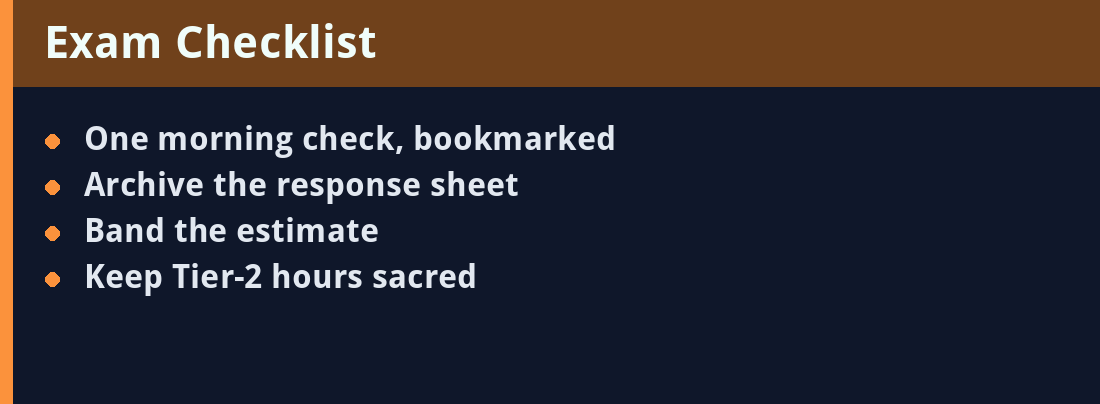
- Morning check: the commission’s notice page, once, before study begins.
- Response sheet: download the day it releases, archive the PDF.
- Provisional key: verify marked answers against your memory sheet.
- Challenge window: three to four days, proof attached per question.
- Final key: recompute, then let the result arithmetic speak.
Moreover, the protocol costs five minutes a morning, therefore it steals nothing from the taper or the Tier-2 blocks. However, checking more than once daily converts a watch into a worry, and worries compound worse than interest. Consequently, one check, one bookmark, one breath – the protocol’s whole design.
Reading the Provisional Key
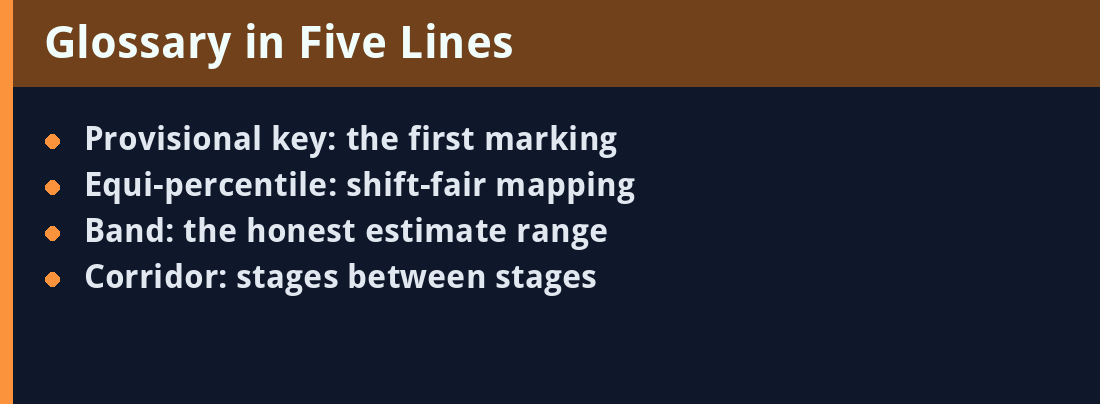
| Item | What to Do |
|---|---|
| Marked answers | Match against your memory sheet |
| Official answers | Note disagreements per question |
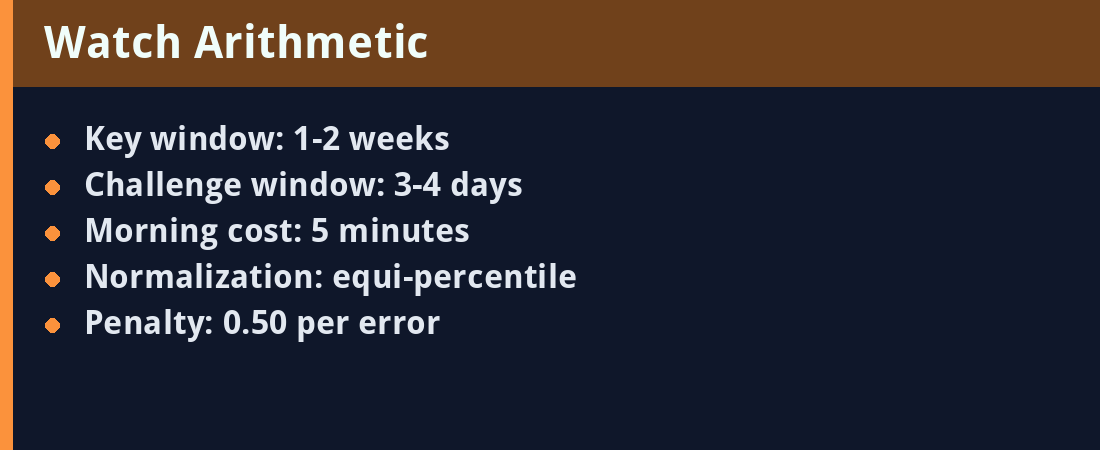
| Score estimate | Apply 0.50 penalty, band it |
| Normalization | Expect equi-percentile adjustment |
The Challenge Craft
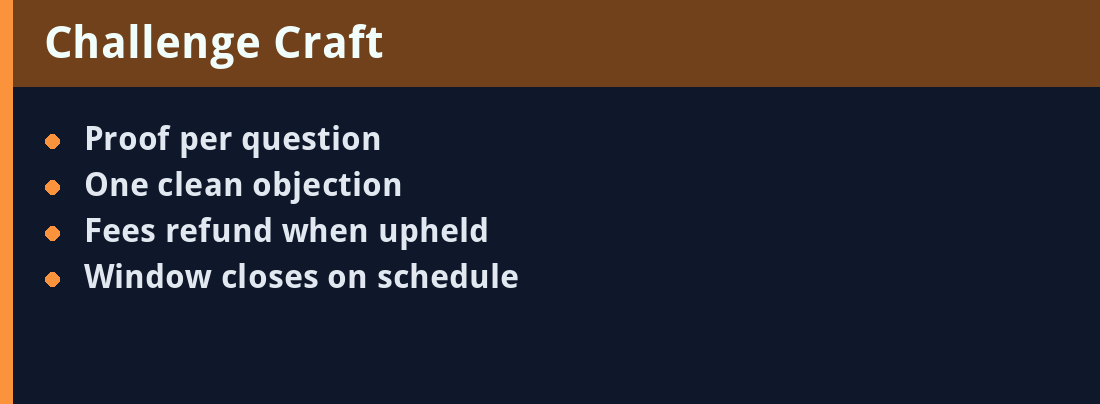
- Challenge only with textbook or official-document proof.
- One clean objection beats three noisy ones.
- Fee mechanics refund when the objection stands.
- The window closes on schedule – no extensions by sentiment.
The Result Arithmetic
Once the final key locks, the pipeline runs: normalized scores rank, category cutoffs fix qualification, and the Tier-2 registry opens for the qualified. Moreover, cutoffs move with vacancy count and paper difficulty, therefore bands beat pin-point predictions. However, your preparation owes the result nothing – the corridor continues either way, and Tier-2 hours started this week already outvalue any cutoff speculation.
Watch the key like an auditor, not like a defendant.
Five-Question Drill
- The key typically releases: the answer is one to two weeks after the window.
- The challenge window runs: the answer is three to four days.
- Normalization uses: the answer is the equi-percentile method.
- The Tier-1 penalty: the answer is 0.50 per wrong answer.
- The watch protocol checks: the answer is once each morning.
FAQ
What if my estimate sits at the band’s edge?
Prepare for Tier-2 anyway, because the corridor pays movers and speculators equally poorly.
Can challenges change the key?
The Thirty-Second Recap
One watch. Five minutes. Therefore, check each morning. Archive the sheet. Verify the key. Moreover, challenges need proof. Bands beat points. However, the corridor owes no holidays. Finally, Tier-2 hours win. Whatever the key says.
Explain It Simply
The examiner is about to publish the answer sheet, and your job this week is simply to be a calm librarian: check the notice board each morning, file the sheet when it arrives, and note disagreements politely with page numbers for proof. However, the reading room stays open regardless – your Tier-2 books wait on the same desk as last week. Therefore, five minutes of watching, hours of preparing, and the result arrives as a calendar event, not as a verdict.
Rapid-Fire
- Key window: 1-2 weeks from 15 September.
- Challenge window: 3-4 days.
- Normalization: equi-percentile.
- Penalty: 0.50 per error.
- Watch cost: 5 minutes daily.
- Corridor rule: preparation never waits.
Abbreviations
- SSC: Staff Selection Commission.
- CGL: Combined Graduate Level.
- OMR: the response sheet.
- DEST: the typing module ahead.
- DoPT: appointments at the corridor’s end.
The Watch Week’s Worst Traps
Moreover, three traps catch candidates every result week, and naming them is half the escape. The first is refresh addiction: checking the site hourly converts a calendar event into a slot machine, and slot machines pay nothing here. The second is forum fever: cutoff threads manufacture anxiety from noise, and noise has no proof column. The third is pause paralysis: waiting for the key before resuming Tier-2, which is exactly backwards, because the corridor pays movers and waits for nobody. Therefore, the watch protocol’s five minutes exist to fence all three traps outside the study day.
Furthermore, the challenge window has its own trap: volume objections. However, the commission reads proof, not passion, therefore one textbook-cited objection outweighs ten indignant ones, and the fee economics agree.
The Challenge Table
| Evidence Type | Strength |
|---|---|
| Standard textbook page | Strong |
| Official notification or release | Strongest |
| Coaching-site consensus | Weak |
| Personal recollection | None |
The Watch Ends Where the Corridor Continues
Moreover, whatever the final key and result arithmetic deliver, the watch ends inside a corridor that does not, and that asymmetry is the page’s deepest lesson. The qualified continue toward Tier-2’s heavier papers and the skill module’s quiet filter, while the unfortunate-or-borderline continue toward the next notification with a sharper diagnostic in hand. Therefore, both populations wake the morning after results to the same instruction: open the calendar, block the study hours, and let the corridor schedule the grief or the celebration around the work, never the reverse. However, the instruction sounds harsh only until the first deadline after a result enforces it, and every exam calendar enforces it within weeks.
Furthermore, the site’s SSC category holds the full corridor map – the review page, the Tier-2 starters, the diagnostic grid – and the watch page ends by simply pointing back at them. Therefore, read the key, file the feelings, and walk the corridor the map already drew.
Ten-Question Sprint
- The watch’s daily cost: the answer is five minutes, once.
- The key window: the answer is one to two weeks.
- The challenge window: the answer is three to four days.
- Challenge currency: the answer is proof, not passion.
- Normalization method: the answer is equi-percentile.
- The Tier-1 penalty: the answer is 0.50.
- The estimate format: the answer is a band, never a point.
- The strongest evidence: the answer is official releases.
- The weakest evidence: the answer is coaching consensus.
- The corridor rule: the answer is preparation never waits.
The Watcher’s Ledger Note
Moreover, record each morning’s check in one line – date, site status, action – because the ledger converts a watch into a habit and prevents the refresh addiction the traps section described. However, the ledger closes the day the final key locks, and its last line should read “corridor resumed”, which is the only sentence result weeks ever truly require.
The One-Line Watch Manual
Moreover, every protocol page earns a one-line manual, and the watch’s line is this: check once, prove everything, prepare regardless. Therefore, write the line where the morning check happens, because protocols live only where eyes land, and the three-beat line carries the whole page – the discipline, the craft and the corridor – in seven words. However, the line’s third beat is the one worth underlining, since the first two merely guard the third, and the third is the only beat the result cannot touch. Consequently, the watch week ends the way it began: with study hours booked, a corridor walked, and a calendar that refuses to wait for verdicts before it moves.
The Final Word
Therefore, bookmark the notice page, schedule the single morning check, and give the corridor the hours the watch would otherwise steal – because keys arrive on the commission’s calendar, but corridors run on yours.
The Numbers Echo
- Watch cost: 5 minutes daily, once.
- Key window: 1-2 weeks; challenges: 3-4 days.
- Penalty: 0.50; normalization: equi-percentile.
- Corridor rule: 1 line, 7 words – prepare regardless.
Key Takeaways
In conclusion, the watch week rewards a librarian’s calm: five-minute checks, archived sheets, proof-backed challenges and banded estimates. To summarize, the key arrives as a calendar event while the corridor continues on schedule. Therefore, watch once daily, prepare all day, and let the arithmetic resolve itself.
References: ssc.gov.in notices, and the commission’s scheme documents.
Related reading
- Time, Speed & Distance Shortcuts: Relative Speed, Trains and Boats Formulas with Solved SSC PYQs
- SSC CGL Tier-2 Quant Diagnostic: 25 Questions That Map Your Four-Week Repair Plan
Quick revision
- Morning check: the commission’s notice page, once, before study begins.
- Response sheet: download the day it releases, archive the PDF.
- Provisional key: verify marked answers against your memory sheet.
- Challenge window: three to four days, proof attached per question.
- Final key: recompute, then let the result arithmetic speak.
- Challenge only with textbook or official-document proof.
Have a doubt on this topic?